

Articles

The Legendary Pink Dots announce new album Angel In The Detail

Veteran experimental rockers The Legendary Pink Dots will release their new album this year and tour to mark their 40th anniversary

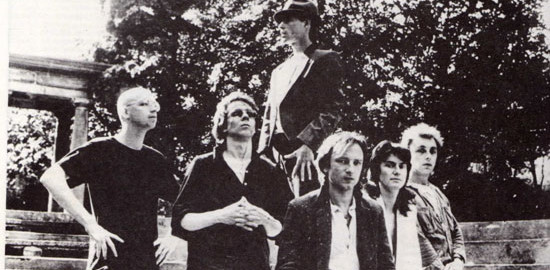
The Legendary Pink Dots (Image credit: Amikal Sonik © Antoine Represse)


Veteran experimental Anglo-Dutch outfit The Legendary Pink Dots have revealed details about their new studio album.

The follow-up to 2016’s Pages Of Aquarius is titled Angel In The Detail and it’ll be released on August 23 through Metropolis Records. Continue reading The Legendary Pink Dots announce new album Angel In The Detail


Bandcamp Daily: A Beginners’ Guide to Cult Psych Icons the Legendary Pink Dots

Pink Dots

Photo by Alberto Garcia

Venture over to the Legendary Pink Dots’ Bandcamp page and you might feel a bit overwhelmed. Over three and a half decades in, the Anglo-Dutch band have amassed an overflowing cache of full-length albums, archival releases, and holiday-themed one-offs. And that’s without factoring in the respectively ample solo discographies of founding members Edward Ka-Spel and The Silverman (Phil Knight); or their side project, The Tear Garden.

Founded in 1980, The Legendary Pink Dots have been pushing psychedelic music through the late 20th century and well into the 21st. They draw from the influence of ’70s German rock outfits like Can and Neu!, but their sound is never a flashback. Instead, they emerged from the electronic music underground of the early 1980s with a distinct sound that makes them difficult to pigeonhole to this day. The Legendary Pink Dots’ wheelhouse proves equally welcoming to fans of post-punk and minimal synth, industrial and darkwave—and yet, the band themselves aren’t quite any of those things. They’ve spent decades evolving, hitting multiple peaks throughout their career as the line-up expanded and contracted. Their oeuvre reflects that winding journey, from the dark, orchestral heaviness of the ’80s, to the psych-pop haze of the early ’90s, to the sci-fi electronics of the aughts.

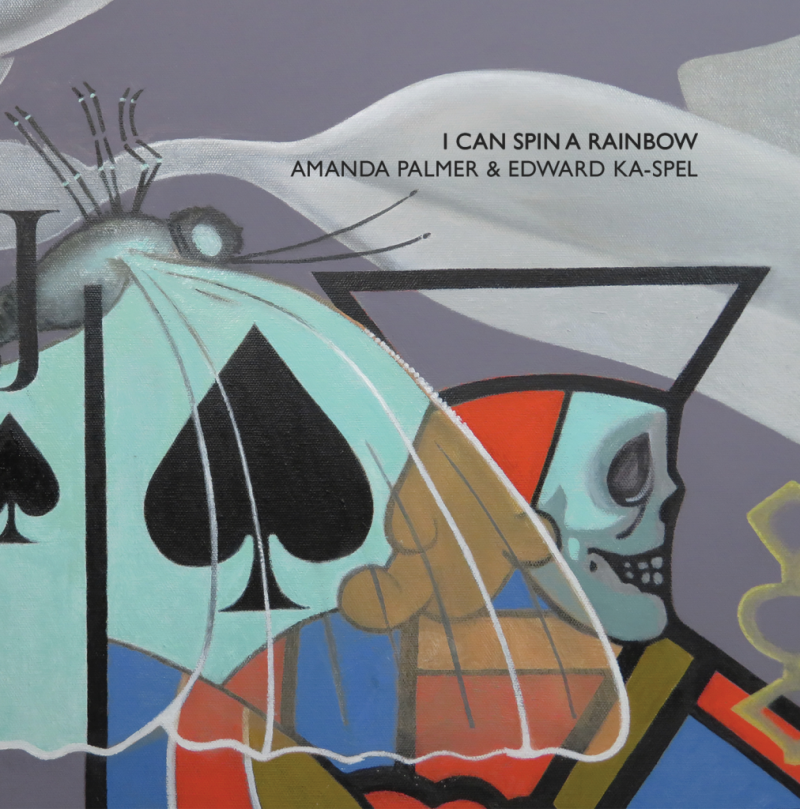
The Legendary Pink Dots have remained a cult band amongst cult bands. They haven’t become post-punk memes like Joy Division or Bauhaus have. Nevertheless, their following includes some well-known devotees. Skinny Puppy’s cEvin Key is known for having followed Legendary Pink Dots’ work since the band’s early years, and collaborated with Ka-Spel as The Tear Garden (they’ve released seven albums together since 1985, the most recent being 2017’s The Brown Acid Caveat). Singer-songwriter and erstwhile Dresden Doll Amanda Palmer is another longtime fan; just last year, she linked up with Ka-Spel and ex-Dots violinist Patrick Q. Wright for a one-off collaborative LP album titled I Can Spin a Rainbow. Last but not least, MGMT singled out the Dots—more specifically, their stylistic flexibility—as a source of inspiration for their breakthrough album, 2007’s indie-pop blockbuster Oracular Spectacular.

Needless to say, immersing oneself in the Legendary Pink Dots’ universe is deeply rewarding—and a bit overwhelming. Here’s a list of 10 standouts from the first 30 years of the band’s career to help you get started.

Brighter Now

The Legendary Pink Dots’ formative years coincide with the development of industrial music, so it can be really easy to think of them as emerging from that movement. After all, Edward Ka-Spel has collaborated with cEvin Key of Skinny Puppy (The Tear Garden) and Nurse with Wound’s Steven Stapleton. Back in 1991, though, Ka-Spel described the band’s early sound to Spiral Scratch Magazine as “more like industrial… nursery rhymes!” That stands as an apt description of the Dots’ 1982 vinyl debut, Brighter Now. It’s an oddball album in the band’s catalog; at times its songs resemble stripped-down versions of early ’80s synthpop as opposed to the dense, electronic rock that would follow, but there are moments throughout that point to where the Dots were heading.

The Tower

True to its title—a reference to the infamous Tower of London—1984’s The Tower is an album shaped by British politics, namely Margaret Thatcher’s policies and the then-Prime Minister’s chumminess with Chilean dictator General Augusto Pinochet. It’s a dark album, with a sound reflecting the urgency and frustration of the subject matter. Guitar, synths, and violin build into walls of sound every bit as claustrophobic and threatening as a castle prison. Ka-Spel had proved himself to be a charming and poetic singer and lyricist by the time of the record’s release—but on songs like “Break Day” and “Tower 1,” he proved just how visceral he could be, as well.

Island of Jewels

Released in 1986, Island of Jewels was the first album for The Legendary Pink Dots’ contract with notable indie label Play It Again Sam, a move that helped garner wider recognition for the band. At times, Island of Jewels takes on the qualities of film music, its songs tooled to guide listeners through a series of tense scenes and dramatic turns of events: “Emblem Parade” may well be the soundtrack to a long-lost Alfred Hitchcock film set in an ’80s nightclub. The record’s legacy is just as complicated as its sound. Ka-Spel seemed ambivalent when discussing Island of Jewels in an interview for Ptolemaic Terrascope in 1991, remarking, “Some of our best and worst moments are on that album”—but over 20 years later, he embraced it wholeheartedly in the Bandcamp description for its 2012 reissue, declaring it “one of the best albums The Dots ever made.”

The Golden Age

One of the most curious aspects of the Legendary Pink Dots is the band’s sizable goth following—a befuddling degree of popularity, given their lack of ties to the scene proper. The Golden Age might be part of the reason for this. The band’s 1988 album is the home of “Black List,” a long, moody, and rhythmic number that has had its fair share of spins inside goth clubs. It’s also a downright creepy album. Ka-Spel is a true storyteller and here he tells chilling tales with menacing characters and mysteries lurking under vivid poetry. The Golden Age was made while the Dots were at a crossroads; half the band left following tour and Ka-Spel and the Silverman were living in a caravan. The resulting album has more of a minimal sound than, for example, Island of Jewels, adding to the sinister vibe.

The Crushed Velvet Apocalypse

The Crushed Velvet Apocalypse, originally released in 1990, is perhaps the most accessible Legendary Pink Dots album. If your tastes lean towards sing-a-long songs, you can get into this album fast, but you might also lose yourself in the more atmospheric moments of cuts like “Green Gang.” It’s also one of their most masterful albums. The Dots shows their chops at crossing genres as they deftly move through music that ranges from the delicate folk of “I Love You in Your Tragic Beauty” to the harsh electronic sound of “Hellsville.” Lyrically, Ka-Spel is at his best—whimsical, yet witty and poignant. “Princess Coldheart” is a dark, cheeky fairytale spun in a song that’s about as pop as the Dots will ever get, but “Just a Lifetime” brings together sci-fi and fantasy imagery that taps into a very real sense of unease about the future. His line, “A fire-eater went insane and torched the final tree,” rings more relevant now in the era of climate change and catastrophic brush fires.

The Maria Dimension

Ideally, you should listen to The Maria Dimension right after The Crushed Velvet Apocalypse. The albums were released about a year apart and represent The Legendary Pink Dots’ transition into the 1990s. Where “Pennies for Heaven” and  “Belladonna” harks to the songwriting on The Crushed Velvet Apocalypse, much of the rest of the album pushes the band’s sound further into psychedelic realms. That’s thanks in part to the songwriting and recording process. In a 2015 Blurt interview, Ka-Spel explained that The Maria Dimension came into being after a month of improvisation. For the curious, some of those improv moments can be found on The Maria Sessions, also available through the Dots’ Bandcamp site.

Hallway of the Gods

The Legendary Pink Dots have spent their career doing their own thing, but, in 1997, that thing serendipitously fell in line with what was happening in the indie rock world. The band’s krautrock influences took a softer turn, resulting in songs like the tender ballad “Sterre,” the chilled-out space rock of “Lucifer Landed,” and the wild sci-fi jam “The Saucers Are Coming.” Hallway of the Gods sounds perfectly comfortable next to other releases from that year, like Stereolab’s Dots and Loops, Broadcast’s Work and Non-Work, and Spiritualized’s Ladies and Gentlemen We Are Floating in Space. But, The Legendary Pink Dots were already more than 15 years into existence. They had an established following and had already produced a large catalog of work. Perhaps that lack of newness led to Hallway of the Gods being sorely overlooked.

Chemical Playschool Volumes 11, 12 & 13

Chemical Playschool is a series of The Legendary Pink Dots releases that date back to early in the band’s history, when they were made as very limited-edition cassettes. This is the space where the Dots can get really weird and creative. Cassettes with handmade covers? They tried that in the early ‘80s. By the new millenium, though, the question was, “What could you do with the CD format?” First released in 2001, Chemical Playschool 11, 12, 13 was initially conceived as a three-CD set with three hours of music that were only paused while the discs changed. The material came in part from existing tapes and included new compositions, all of which become a seamless collage where Ka-Spel’s vocals are meticulously placed across the atmospheric canvas. The release is split up into more manageable chunks on the Bandcamp release. However, that still means that you’re getting a few tracks that hover around (and over) the 40 minute mark—more than enough time to zone out.

Plutonium Blonde

With a band whose history is as long as The Legendary Pink Dots’, it’s easy to concentrate on the early releases and leave it at that. Don’t make that mistake: the Dots continued to move forward in the 21st century with work that is every bit as interesting as the albums that garnered their initial fan base. 2008’s Plutonium Blonde might be the best example, melding borderline-ambient moments with Ka-Spel’s weird and wonderful stories. Whereas “An Arm & a Leg” plays out as a captivating mini radio drama for a modern audience, “Mailman” uncharacteristically steps into country terrain, albeit country with a space-rock twist.

Seconds Late for the Brighton Line

Released in 2010, Seconds Late for the Brighton Line coincided with The Legendary Pink Dots’ 30th anniversary, as well a time of transition: longtime members Martijn De Kleer and Niels van Hoorn left the fold before the band hit the studio. (Erik Drost, who played with the band earlier in the ’00s and appeared on albums like Poppy Variationsand The Whispering Wall, rejoined the Dots founding members Edward Ka-Spel and The Silverman.) One might think that, with a shrunken line-up, the band would go for a simpler sound, but that’s not the case. There’s still a lot going on here, and it takes multiple listens to discover all the sounds tucked into this collection of songs. “Endless Time,” one of the album’s standout tracks, uses a clock-like rhythm to introduce a soothing melody that very gently crashes into waves of noise. “God & Machines” uses atmospheric noise to heighten the spectral quality in Ka-Spel’s voice, creating the sound of an unknown and uncomfortable afterlife.

-Liz Ohanesian

source: https://daily.bandcamp.com/2018/12/04/legendary-pink-dots-primer/

Post-Punk.com Best of 2017

Best Collaborative Work

Amanda Palmer and Edward Ka-Spel | I Can Spin A Rainbow

A long time in the making, Amanda Palmerand her musical hero and friend Edward Ka-spel of The Legendary Pink Dots  released the fantastic surreal dreamscape  I Can Spin A Rainbowwhich can be considered some of the best material from both artists illustrious and prolific careers.

We interviewed Amanda and Edward about the LP here.

The music on I Can Spin A Rainbow could be described as lullabies from another dimension—something you could imagine Jeanet and Caro including in soundscapes of the film City of Lost Children.

Speaking of film—there are two glorious videos from the LP, that we urge you to watch if you have not done so yet.

Check out one of them—Beyond the Beach below:

See the full article at: http://www.post-punk.com/post-punk-com-best-of-2017/

Rolling Stone- Amanda Palmer, Edward Ka-Spel Announce New Album ‘I Can Spin a Rainbow’

“Like a thunderstorm heard from a living room,” Palmer says of collaboration

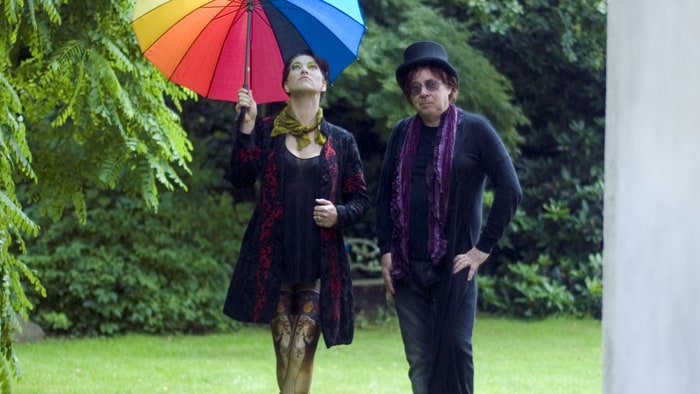
amanda_edward-by-viki-beshparova-copy-c7bc6795-bb87-4580-9157-51b236c0f864Amanda Palmer and Legendary Pink Dots’ Edward Ka-Spel joined forces on a new album, ‘I Can Spin a Rainbow,’ which they will support with a short tour. Viki Beshparova

Amanda Palmer collaborated with Edward Ka-Spel, founding member of the experimental rock group the Legendary Pink Dots, on the upcoming record I Can Spin a Rainbow. Following the album’s May 5th release, the two artists will embark on a short tour in the U.S. and Europe.

Palmer is a longtime fan of Ka-Spel’s group. She initially met the band in 1992 and later hosted several members of the group when they played in the United States in 1995. More than 20 years later, the duo started work on I Can Spin a Rainbow last spring at a studio in England owned by Imogen Heap.

“We merged our songwriting heads and poetic worlds to make a new universe,” Palmer said in a statement. “We would sit in Imogen’s house drinking cups of tea, bemoaning the state of the upcoming election, binge drinking in the U.K., the refugee crisis, our internet addictions, frightening news we had read, our relationships … and then we’d compost all of the ingredients of our fears and conversations into song form.”

Palmer described the resulting album as “a spiritual experience.” “The rainbow metaphor  which is also a nod to the ‘spinning beach ball of death’ on a Mac  was a wide-open image that kept popping up as a recurring theme on the record,” Palmer added. “It’s both dark and light at the same time. To me, the songs are simultaneously frightening and comforting, like a thunderstorm heard from a living room.”

I Can Spin a Rainbow is set for a May 5th release. Palmer and Ka-Spel kick off the American leg of their subsequent tour on May 17th in Boston, where Palmer first saw the Legendary Pink Dots more than two decades ago. After five American dates, the band heads to Europe. Tickets are available via Palmer’s website.

I Can Spin a Rainbow Track List

1. Pulp Fiction
2. Shahla’s Missing Page
3. The Shock of Kontakt
4. Beyond The Beach
5. The Clock at the Back of the Cage
6. The Changing Room
7. The Jack of Hands
8. Prithee: Liquidation Day
9. Rainbow’s End
10. The Sun Still Shines (vinyl only)
11. Subway (vinyl only)

Amanda Palmer and Edward Ka-Spel Tour Dates

May 17 – Boston, MA @ Middle East
May 20 – New York, NY @ Bowery Ballroom
May 21 – Brooklyn, NY @ Rough Trade NYC
May 23 – San Francisco, CA @ DNA Lounge
May 24 – Los Angeles, CA @ Troubadour
May 31 – Warsaw, PO @ Proxima
June 1 – Munich, DE @ Muffathalle
June 2 – Leipzig, DE @ Wave & Gotik Treffen
June 4 – Prague, CZ @ Palác Akropolis
June 5 – Hamburg, DE @ Fabrik
June 9 – Antwerp, BE @ Trix Club
June 10 – Amsterdam, NL @ Melkweg
June 11 – Paris, FR @ Cigale
June 13 – London, UK @ Heaven
June 16 – Vienna, AT @ Porgy & Bess

Source: http://www.rollingstone.com/music/news/amanda-palmer-edward-ka-spel-announce-i-can-spin-a-rainbow-w467994

The Legendary Pink Dots embrace the unknown (Creative Loafing)

Edward Ka-Spel and Co. kick open the doors of perception

Chad Radford Sep. 28, 2016

lpd-creative-loafing

COOL AQUARIANS: The Legendary Pink Dots are Erik Drost (from left), Phil “the Silverman” Knight, Edward Ka-Spel, and Joep Hendrikx. | Dakis

Reaching beyond the boundaries of waking life — musically, spiritually, and psychologically — has long been the mission for the Legendary Pink Dots’ leader, singer, and keyboard player Edward Ka-Spel. Since the group formed circa 1980, Ka-Spel and synth player Phil “The Silverman” Knight and an ever-changing lineup have turned out countless hours of music, perpetually expanding upon a body of work that lies outside the scope of traditional psychedelia, kraut rock, industrial music, and new wave. “We wanted to create a sound that was completely our own,” Ka-Spel says.

Albums such as 1988’s Any Day Now, 1990’s Crushed Velvet Apocalypse, and 1991’s The Maria Dimension illustrate the group’s decades-long plunge into musical exploration. Each of these albums, along with scores of other titles, provide the foundation on which Ka-Spel and the East London-based outfit have sculpted their kaleidoscopic sound that is crafted with a vast range of acoustic and electronic musical devices.

In April, the Legendary Pink Dots released Pages of Aquarius (Metropolis Records). It’s a charged album that opens with a salvo of war drums in “Mirror Mirror,” tapping into a sense of trademark urgency and mystery. Drawn-out rhythms, noise, and acid-folk melodies carry the group gracefully forward into spacious and mystifying new musical terrain. Ka-Spel opens the album singing: “Mirror mirror on the wall, really wish I had the balls to look you in the eye, but I don’t. I propose that we wait until the morning. There’s a thousand things to fix, and I’m feeling pretty sick. I prefer the window.”

It’s a cryptic intro that sets the mood for one of the group’s most arresting albums in recent years. Releasing such a paradoxical album in 2016 illustrates that after 36 years, the Legendary Pink Dots’ drive to reach deeper into unknown corners of music is as powerful as ever. Songs such as “D-Train” and “Credibility” billow with a shadowy sense of unease, but to dwell on that heaviness misses the totality of the album, and the Legendary Pink Dots’ vital essence.

“There are many facets to our lives,” Ka-Spel says. “We want to put across the best representation of all those different shades of color and subtlety. There is humor in the music; there is sadness and joy — all the colors of the spectrum — and it suggests that there are colors you have not seen yet. We want to open new doors — keep kicking at them. We know the doors are there. We want to open them so that other people can look through and see that there is something wonderful and huge that lies beyond what you know.”

Ka-Spel is a self-taught musician. His mother offered to pay for piano lessons when he was 8 years old. He says he declined and has regretted it ever since. It wasn’t until years later when he witnessed the unbridled industrial power of Throbbing Gristle that he gained the confidence to re-create the music he heard in his head. “Growing up, there were very few of us who were into music in this way,” Ka-Spel says. “We were like a secret society. I will always remember wearing a Magma T-shirt and riding on the tube and someone on the other side of the carriage would point and say, ‘Yeah, me too!’”

Ka-Spel has also released dozens of solo albums and contributed to a handful of side projects including Mimir with German texture/atmospheric sound artist Christoph Heemann. He also leads the Tear Garden with cEvin Key of Skinny Puppy. The group is currently working on a new album scheduled to arrive in June 2017. Ka-Spel has also recently finished a record with Amanda Palmer of Dresden Dolls, titled I Can Spin A Rainbow, due out next spring.

For the group’s current North American tour, Ka-Spel and Knight, along with guitarist Erik Drost and sound engineer Joep Hendrikx, are on the road supporting Pages of Aquarius. With such a voluminous body of work, material from the past always appears in their setlists. But nostalgia is something of a dirty word for Ka-Spel. “It’s almost like another way of saying karaoke,” he says. “I understand the appeal, but if you’re trying to re-create something that you did in the ’80s, you have to ask yourself, ‘Why am I even [making music]?’”

Ka-Spel has also released dozens of solo albums and contributed to a handful of side projects including Mimir with German texture/atmospheric sound artist Christoph Heemann. He also leads the Tear Garden with cEvin Key of Skinny Puppy. The group is currently working on a new album scheduled to arrive in June 2017. Ka-Spel has also recently finished a record with Amanda Palmer of Dresden Dolls, titled I Can Spin A Rainbow, due out next spring.

On stage, songs such as “D-Train” from Pages of Aquarius and “Ten O’er Nine” from 2014’s 10 to the Power of 9 Vol.1 LP blend with classic Pink Dots numbers “Love Puppets” from 1983’s Curse LP or “Disturbance” from The Maria Dimension. But these older numbers have been radically rearranged to fit in with the context of what the group is doing now. “The Pink Dots began as a band that wanted to take risks and open new doors, and that’s what we still want to do,” Ka-Spel says. “We’re more interested in presenting the future than we are in looking to the past.”

This ever-expanding approach propels the Legendary Pink Dots forward, and Pages of Aquarius marks one more chapter in the group’s legacy. The future is unwritten, but the group is already poised for take off into the unknown.

The Legendary Pink Dots play the Drunken Unicorn on Wed., Oct. 5. $10. 9 p.m. With Orbit Service and Cave Bat. 736 Ponce De Leon Ave. www.thedrunkenunicorn.net.

source: http://www.clatl.com/music/article/20834992/the-legendary-pink-dots-embrace-the-unknown

FROM THE DESK OF AMANDA PALMER: THE LEGENDARY PINK DOTS

Published on Magnetmagazine.com

Amanda Palmer has been a busy lady. It’s been four years since her last record, Who Killed Amanda Palmer, and in the interim she’s been dabbling in all sorts of projects: business (you can read about her huge Kickstarter success), music (channeling her musical roots for her new album, Theatre Is Evil) and fun (adapting Neutral Milk Hotel for a high-school production). Palmer will also be guest editing magnetmagazine.com all week. Read our brand new feature on her.

Continue reading FROM THE DESK OF AMANDA PALMER: THE LEGENDARY PINK DOTS